
Flat roof insulation is critical for energy efficiency and structural integrity in Albany's extreme climate. Inadequate insulation in flat roofs causes massive heating and cooling losses, often 30-40% of a building's total energy consumption escapes through poorly insulated roofs. Beyond energy costs, improper insulation leads to condensation accumulation, moisture damage, and premature roof failure. Understanding insulation types, R-value requirements, and installation methods helps you make smart decisions for commercial or residential flat roof projects near you.
Mastaba Roofing has installed hundreds of commercial flat roofs across the Capital Region for 15+ years. We understand NY energy codes, climate zone requirements, and how to prevent condensation problems. This guide covers everything you need to know about flat roof insulation decisions for your Albany building.
Key takeaways
- Proper flat roof insulation reduces energy costs 20-30%, paying for itself within 3-5 years
- Polyiso insulation provides R-6.5+ per inch, best value for Albany's climate
- NY code requires R-30 minimum, R-35 for commercial buildings, R-40 optimal for efficiency
- Above-deck installation prevents condensation and allows easy future upgrades
- Vapor barriers prevent moisture accumulation that causes mold and premature failure
- Professional installation by fully insured contractors ensures code compliance and performance
01Why Flat Roof Insulation Matters in Albany Climate
Albany's climate extremes make proper insulation essential. Winters average 30°F, requiring significant heating. Summers reach 85°F+, requiring strong cooling. An uninsulated flat roof acts like a thermal bridge, allowing heat loss in winter and solar heat gain in summer. Properly insulated flat roofs reduce HVAC loads by 20-30%, translating to thousands in annual energy savings. Over a roof's 20-30 year lifespan, quality insulation investment returns many times over.
Beyond energy savings, insulation prevents moisture problems unique to flat roofs. Warm moist air from heated buildings rises through poorly insulated roofs, condensing on cold roof decking. This moisture damages insulation, causes mold growth, and accelerates roof deterioration. Proper insulation with vapor barriers prevents condensation and extends roof life by 10+ years compared to under-insulated systems.
02Insulation Types: Polyiso, EPS, and XPS
Polyisocyanurate (polyiso) is the most common flat roof insulation in Albany. It provides excellent R-value of R-6.5 to R-6.8 per inch, meaning thinner material achieves target R-values. Polyiso is lightweight, easy to install, and cost-effective. It has excellent fire ratings and structural integrity. Minor disadvantage: polyiso can absorb some moisture if not properly sealed, though modern installations prevent this with integral vapor barriers.
Expanded Polystyrene (EPS) costs less than polyiso but provides lower R-value (R-3.6 to R-4 per inch). You need 50% more material to reach the same R-value, which increases cost and weight. EPS is commonly used for low-budget projects but not recommended for Albany climate where energy efficiency is critical. Extruded Polystyrene (XPS) resists moisture better than EPS but costs significantly more than polyiso while providing similar R-values. For most Albany flat roofs, polyiso represents the best value and performance combination.
03R-Value Requirements for NY Climate Zone 5
Albany is located in IECC climate zone 5, which requires minimum R-30 for flat roofs in most residential applications. NY state energy code and many local building departments require R-35 minimum for commercial buildings. New construction or major renovations must often exceed minimums, many buildings target R-35 to R-40 for long-term energy efficiency and code compliance. Higher R-values cost more initially but save significantly on heating and cooling throughout the roof's lifespan.
When calculating optimal R-value, consider your building's use. 24-hour occupied commercial buildings justify higher R-values than seasonal or intermittently used spaces. When replacing an existing flat roof, upgrading from R-20 to R-35 typically costs $3-$7 per square foot but saves $500-$2,000 annually in energy costs for average commercial building. Most projects achieve payback within 3-5 years through energy savings alone.
Get a free, no-pressure estimate from a fully insured local crew.
04Above vs Below Deck Installation Methods
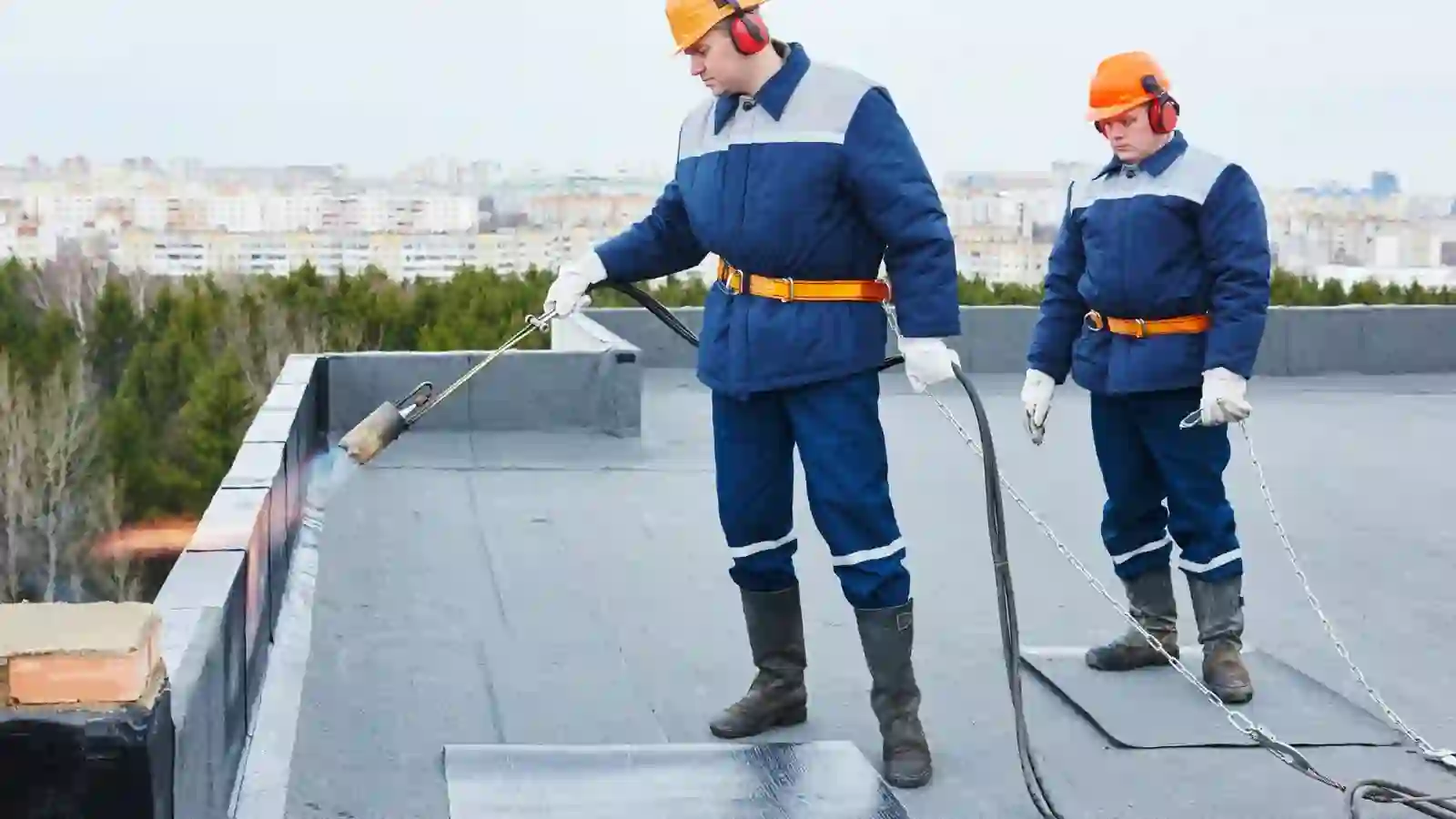
Modern flat roof installations place insulation above the roof deck (over-deck installation). Insulation sits on decking, then roofing membrane covers everything. This is easier, more efficient, and standard practice in new construction and reroofing. Insulation can be upgraded during roof replacement without disrupting building interior. Above-deck insulation prevents condensation by keeping roof deck warm, improving building durability.
Below-deck (under-deck) insulation is mounted to the roof deck's underside, typically in attic spaces. This was common historically but is largely obsolete because upgrades require attic access and interior disruption. Below-deck insulation allows moisture from warm air to reach cold decking, causing condensation. Unless space constraints force below-deck installation, professional practice recommends above-deck placement for superior performance and easier future maintenance.
05Condensation Prevention and Vapor Barriers
Condensation is the primary enemy of flat roof insulation. Warm moist air from the building rises and meets cold roof deck, moisture condenses on this cold surface, accumulating inside insulation layers. This moisture degrades insulation performance and causes mold and rot. Proper condensation control uses vapor barriers (or retarders) placed below insulation, blocking moisture from reaching the cold deck.
Professional Albany contractors use continuous vapor barrier systems that prevent condensation entirely. Modern polyiso boards have integral vapor barriers making installation simpler. During flat roof replacement, your fully insured contractor should verify existing moisture damage and size vapor barriers properly for your specific building, inadequate vapor barriers negate insulation benefits. Proper installation prevents the condensation problems that plague many older flat roofs in the Capital Region.
Flat Roof Insulation Consultation Near You
Mastaba Roofing designs flat roof systems optimized for Albany climate. Fully insured. 15+ years commercial experience. Free energy efficiency assessment.
06Related Roofing Services
Mastaba Roofing serves Albany, Clifton Park, Troy, and the entire Capital Region. Fully Insured, 15+ years experience, 10-year workmanship warranty.
- Roof RepairSame-day emergency service
- Roof Replacement$0 down financing available
- Free Roof Inspection21-point inspection report
- Metal Roofing50+ year lifespan
- Emergency Repair24/7 storm damage response
Mastaba Roofing serves Albany and the Capital Region from 4 local offices. $0 down financing up to 140 months.
07Flat Roof Insulation FAQ
What R-value should flat roof insulation have in Albany, NY?
Albany is in climate zone 5, requiring minimum R-30 to R-38 for flat roofs depending on building code and energy efficiency goals. NY state energy code requires R-35 minimum for most commercial flat roofs. Residential flat roofs often target R-35 to R-40. Higher R-values reduce heating and cooling costs but increase material expense. Most Albany projects use R-30 to R-40 for good cost-benefit balance.
What's the difference between polyiso, EPS, and XPS insulation?
Polyiso offers best R-value per inch (R-6.5+), making it cost-effective. EPS (expanded polystyrene) is cheaper but lower R-value (R-3.6-4). XPS (extruded polystyrene) resists moisture better than EPS but costs more. Polyiso is most common for flat roofs because R-value efficiency matters when space is limited. Mastaba Roofing uses premium polyiso for superior performance.
What's the best insulation placement, above or below roof deck?
Above-deck (over decking) insulation is standard modern practice, easier to upgrade during reroof. Below-deck (under decking) requires attic work and is difficult to upgrade without major renovation. Above-deck is more energy efficient and prevents condensation. Unless space constraints require below-deck, professional installers recommend above-deck placement.
Written by the Mastaba Roofing team. Fully insured roofing and siding contractor with 15+ years and 300+ projects across Albany and the Capital Region. About our team.